Made-to-measure wooden walk-in wardrobes in Xàbia
Commissioning a made-to-measure wooden walk-in wardrobe starts with deciding which type of wood to use and for which parts. At SI, ARMARIO we help you choose between solid wood, natural veneer and decorative boards when preparing wooden walk-in wardrobes in Xàbia, because the single word "wood" covers materials that differ greatly in look, weight and price. This guide helps you recognise them and place them sensibly around the unit.
Shape your next wardrobe.
Try out the measurements, plan the interior layout and choose your finishes. See your idea take shape and share it with us so we can prepare your quote.
Send us your configuration with your measurements and we'll give you a guide price within 24 hours, free of charge. The measuring visit at your home comes afterwards.
Where you want the wood to show
A wooden walk-in wardrobe doesn't have to be wood all the way through. The first step is deciding which surfaces will be seen every day: the drawer fronts, the visible sides, the shelves in the middle or the back panel. The rest, such as backs, plinths or the insides of columns, can be made in a simpler material without it showing.
In a made-to-measure wooden walk-in wardrobe, this selection shapes both the budget and the look. A common solution is to reserve the fine wood for the drawer fronts and the top shelf, which are the first things you see on entering, and finish the rest with a board in a matching tone. That way the whole unit looks like wood without every piece being so.
Solid wood, natural veneer and decorative board
Solid wood is the whole plank. It has weight, can be sanded and its scratches can be repaired, but it moves with changes in humidity and is expensive for large pieces. It is used for exposed shelves, handles and finishing details.
Natural veneer is a thin sheet of genuine wood bonded to a stable board. It gives the authentic grain of a walk-in wardrobe with wood veneer, with less risk of warping and at a reasonable cost. Finally, decorative board imitates the grain with a laminate or melamine: it is the most resistant to wear and the most affordable, with the grain repeating every so often.
Each material has its place, and in wooden walk-in wardrobes mixing them judiciously is the norm.
Structure, doors and accessories
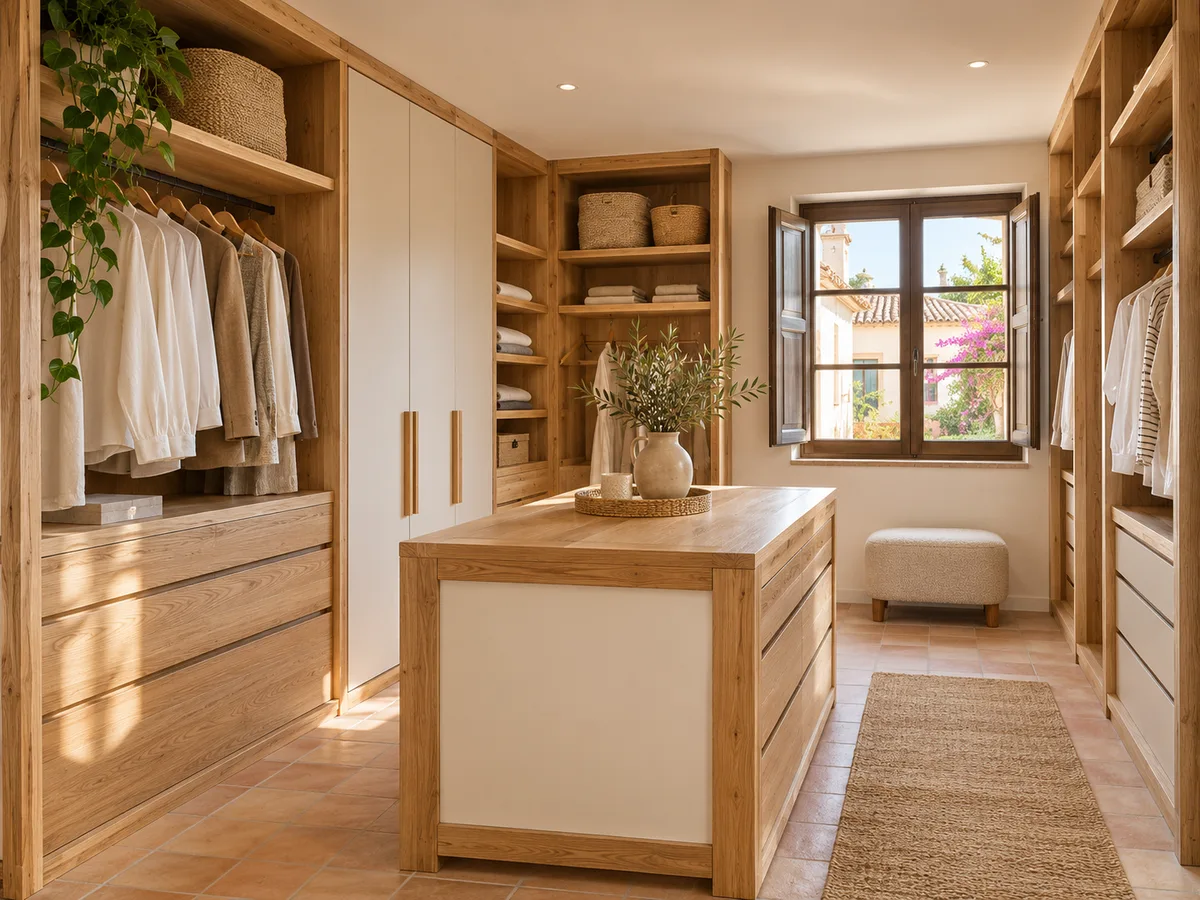
A made-to-measure wooden walk-in wardrobe is made up of three parts that needn't share the same material. The structure, formed by sides, shelves and dividers, carries the weight of your clothes and calls for a firm board. The drawer and door fronts are what you look at and touch, and they suit veneer or solid wood. The accessories, such as rails, runners, dividers or shoe racks, provide the function.
A common combination is a board structure with edging in the same tone, oak veneer fronts and discreet metal rails. Another, more understated, uses a single material across the whole unit for a continuous look. The decision depends on how much of the interior is visible and how much weight each module will carry.
Have you already measured the space?
Send us a photo and the approximate measurements on WhatsApp and we'll give you some initial guidance.
Tone, grain and physical sample
- 01
Tone is the hardest thing to judge on a screen. An oak walk-in wardrobe can range from ash white to deep golden depending on the treatment, and the grain can be fine and even or pronounced with knots. Before deciding, it's worth having a sample in your hands.
- 02
Place it in the room itself, where the unit will go, and look at it in the morning and at dusk. Mediterranean light changes the look of the same wood considerably, and a tone that seemed neutral in the catalogue can turn orangey next to a south-facing window. If you're unsure, ask for two samples and compare them with the floor and the doors; in Xàbia, where strong light floods in for much of the year, this test saves you from choosing a tone that disappoints later.
Latest work by SI, ARMARIO
@si.armario
Made-to-measure wardrobes and walk-in wardrobes
Latest posts
Wood with other surfaces
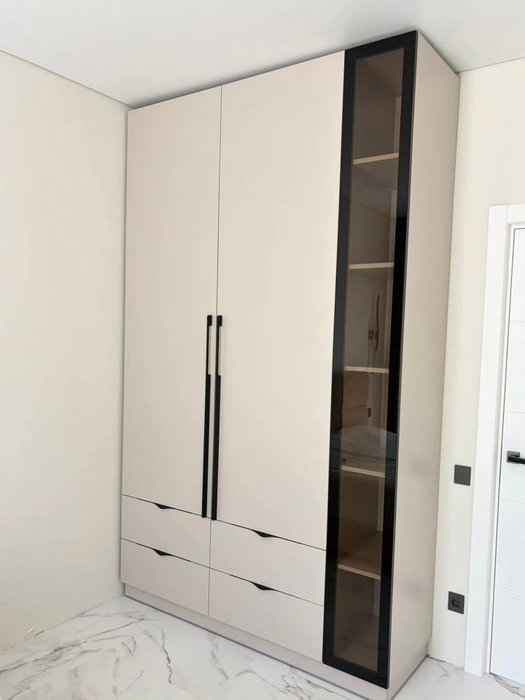
Combining wood with other materials lightens the overall effect, and a wooden walk-in wardrobe benefits from this when it fills a whole room. A smooth white or sand lacquer for the side columns, glass in a handbag display cabinet or metal in rails and handles create contrast and stop the walk-in wardrobe feeling heavy.
There is a practical rule: wood takes the most visible surface, plain colour the largest one and metal the details. If the floor is already wood, the walk-in wardrobe should be clearly a shade lighter or darker, because two woods that are almost the same but not identical look like a manufacturing error rather than a choice.
Cleaning and performance by finish
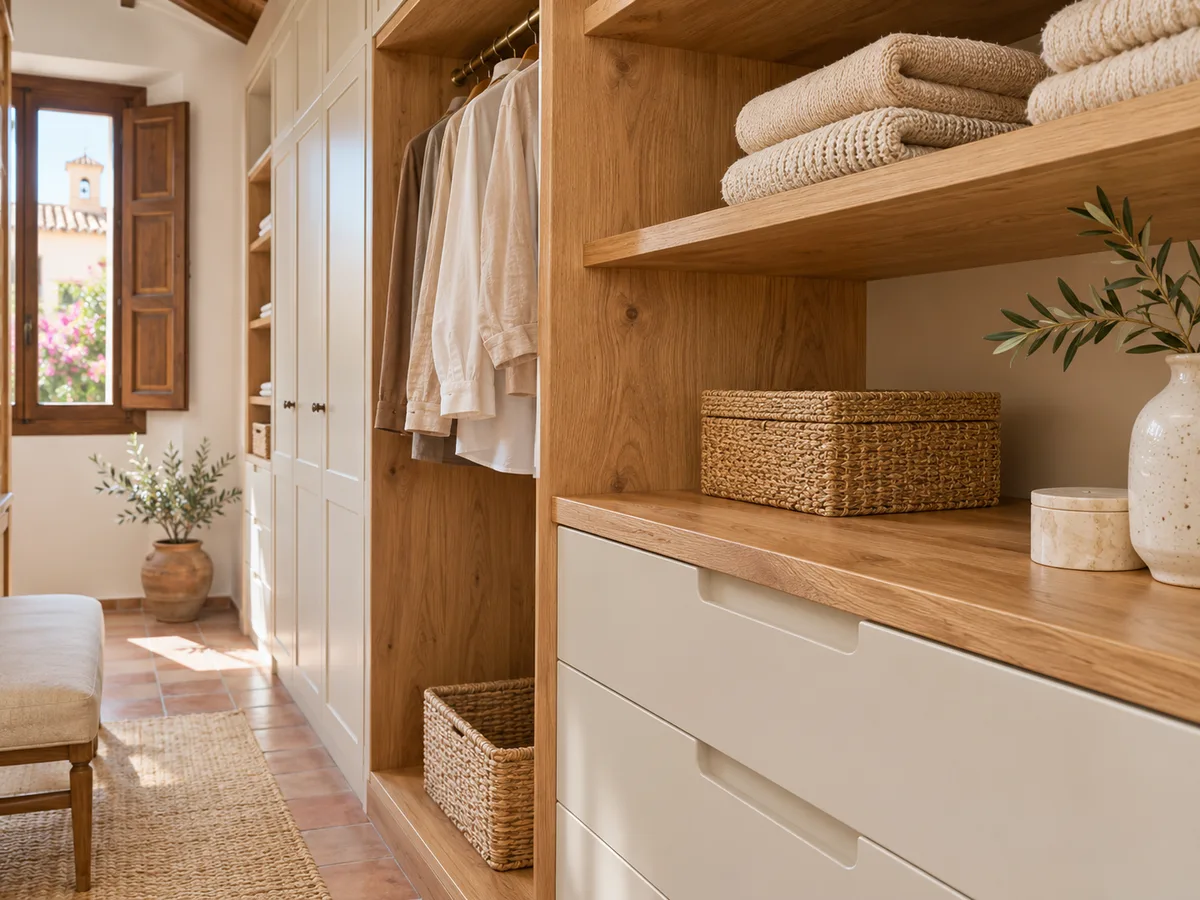
Finishes behave differently day to day, and a wooden walk-in wardrobe with lots of drawers puts them to more use than a wardrobe with doors. Oiled wood is maintained with a slightly damp cloth and can be touched up. Matt varnish protects better against stains, but a deep scratch means refinishing the whole piece. Decorative laminate stands up well to the rubbing of belts and zips.
In a home in Xàbia with humidity in the air, solid wood does well if it has a suitable treatment and minimal ventilation behind the modules, and veneer on a stable board tends to give fewer problems in drawers and fronts. Avoid cleaners with bleach or ammonia, which dull the tone.
Ask us to come and measure up in Xàbia
- 01You leave us your name and your area.
- 02We message you on WhatsApp to agree a day.
- 03The measuring visit costs €50 and is free if you place an order.
How the material affects the quote in Xàbia
In made-to-measure wooden walk-in wardrobes, the material weighs heavily in the final figure. Solid wood is the most expensive option, natural veneer sits in the middle and decorative board is the most contained. Thickness, finish and the number of visible pieces also play a part. A three-metre solid shelf costs far more than three veneer shelves, which is why it is assessed piece by piece, not by price per square metre.
The most effective way to keep costs down without losing character is to put fine wood only where it shows and firm board where it doesn't. To compare combinations, use the configurator, and to understand what goes into the valuation, see the pricing page.
Modern or rustic style with the same wood
- 01
Wood alone doesn't set the style: the cut, the grain and the finish do. A light oak in smooth, handleless fronts looks contemporary; the same oak with pronounced grain, a warm tone and iron handles reads as rustic.
- 02
If you still don't know which way to lean, start from what's already in your home: floors, doors, inherited furniture. Then choose a level of texture, from smooth to very pronounced, and back it up with samples. To make it concrete, request a quote: the measuring visit costs €50 if the work isn't commissioned, and manufacturing takes around 2 to 3 weeks on average.
Enquiry
Tell us about your project in Xàbia
- 1We read your message and look at your photos.
- 2We reply on WhatsApp with a first figure.
- 3We measure up and prepare the final quote. The measuring visit costs €50 if you don't go ahead with the order and is free if you do.
We don't cut a single board until you've approved the design and the price.
Questions
Frequently asked questions about wardrobes in Xàbia
After installation: warranty and care for your wardrobe.
Which parts of a wooden walk-in wardrobe can be natural wood?
Any of them: fronts, visible sides, shelves, rails or panels. It's usual to reserve it for what you see and touch, and to use technical board for hidden structures.
How do I tell real veneer from an imitation grain?
Veneer is real wood, with an irregular grain that doesn't repeat and that you can feel in the fibre. A wood effect is a printed or laminated image, with the same grain repeating every so often. With a sample in the light, the difference is clear.
Should I use the same material throughout the unit?
There's no need. You can vary it by piece, as long as the tone and edging match on whatever is seen at the same time. What matters is that surfaces viewed together have a consistent finish.
When is the final tone of the wood settled?
With physical samples that you check in your own room. Once you choose tone, grain and finish, it is noted in the order so that manufacturing respects what you approved.
Can I order a wooden walk-in wardrobe in Xàbia without knowing the species?
Yes. Tell us whether you prefer a light, warm or dark tone and how much grain you want to see, and we'll suggest options with a sample. With that guidance you don't need to know about species.
Shall we talk about your project?
Send us a photo of the space and some approximate measurements on WhatsApp: we'll give you some initial guidance and arrange the measuring visit.